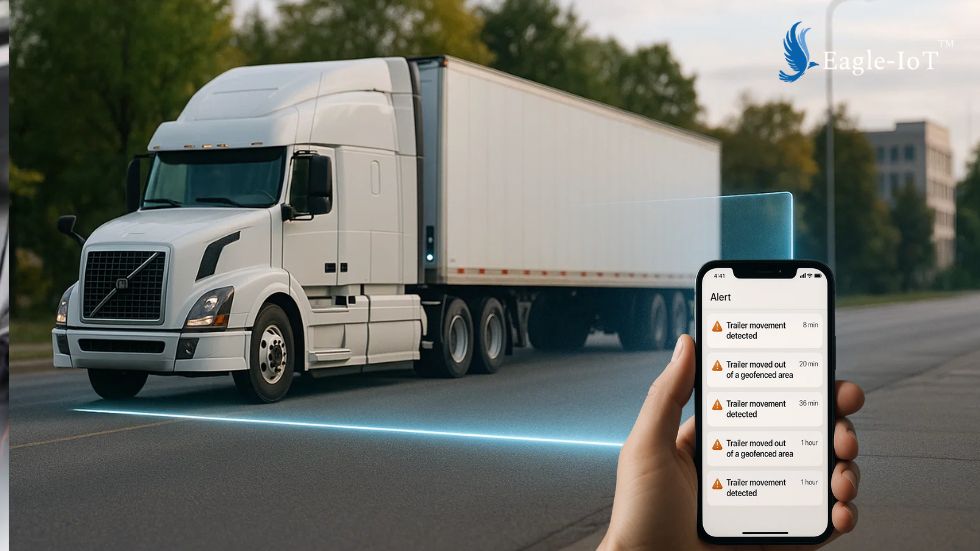
From Reactive to Proactive: A New Era of Fleet Safety

From Reactive to Proactive: A New Era of Fleet Safety

 Fleet safety has traditionally been managed reactively. Incidents occurred, reports were compiled, and corrective actions were taken—often too late to prevent damage, accidents, or financial losses. In today’s business landscape, where safety, compliance, and efficiency directly impact profitability, this outdated approach no longer suffices. 

At Eagle-IoT, we recognized this gap and developed a comprehensive fleet safety solution that shifts the paradigm from reactive monitoring to proactive prevention. By empowering drivers in real time and providing fleet managers with actionable insights, our solution fosters safer habits, minimizes risks, and enhances operational efficiency. 

This article explores the problems fleets face, the struggles of traditional safety management, the proactive solution introduced by Eagle-IoT, the measurable impact of this shift, and how your organization can transform fleet safety practices. 

The Problem: Outdated Reactive Monitoring 

Most fleet operators still depend on monthly or weekly reports to track safety and performance. While these reports provide valuable historical data, they fail in one critical area—timeliness. By the time managers review patterns of overspeeding, harsh braking, or maintenance delays, the risks have already escalated into costly consequences. 

fleet safety

Some of the common problems with reactive monitoring include: 

  • Delayed corrective action: Unsafe behaviors often persist unchecked until they are highlighted in reports. 
  • High accident risk: Drivers may continue dangerous practices like overspeeding or fatigue driving until an incident occurs. 
  • Escalating maintenance costs: Vehicles are often serviced reactively after breakdowns rather than proactively to prevent them. 
  • Limited driver accountability: Reports tied to vehicles, not individuals, fail to capture driver-specific behavior when they switch vehicles. 

This reactive model has proven insufficient in addressing the complexities of modern fleet operations, where safety lapses can mean lives lost, reputational damage, and regulatory penalties. 

The Struggles of Fleet Operations 

To better understand the urgency of change, let’s examine the key struggles faced by fleet operators under reactive systems:

Inconsistent Safety Compliance

When drivers are not monitored in real time, compliance with safety policies becomes inconsistent. Overspeeding, harsh braking, and unauthorized vehicle usage often go unnoticed until much later.

Fatigue-Related Risks

Continuous driving without timely rest breaks remains a major cause of accidents. Yet, in traditional systems, there is no mechanism to remind or enforce breaks during active trips.

Escalating Operational Costs

Reactive maintenance results in unexpected breakdowns and costly repairs. Additionally, harsh driving behaviors lead to increased fuel consumption and faster wear and tear.

Lack of Visibility

Fleet managers struggle with limited real-time visibility into driver behavior and vehicle status. This lack of transparency weakens decision-making and delays response to emergencies.

Accountability Gaps

Drivers often rotate across vehicles, making it difficult to assign responsibility for incidents. This undermines accountability and creates a culture where unsafe behaviors go unaddressed. 

The Solution: Eagle-IoT’s Proactive Fleet Safety Model 

At Eagle-IoT, we redefined fleet safety by introducing a real-time prevention framework that empowers both drivers and fleet managers. 

Real-Time Alerts that Empower Every Driver 

Our system integrates WhatsApp API and driver identification features, ensuring that safety alerts are personalized and follow the driver, not just the vehicle. Regardless of which vehicle a driver operates, they receive immediate notifications tailored to their behavior. 

fleet safety

Key features include: 

  • Overspeeding Alerts – Instant notifications when drivers exceed speed limits. 
  • Harsh Driving Alerts – Warnings for rapid acceleration, hard braking, or sharp maneuvers. 
  • Continuous Driving Alerts – Reminders to take breaks and prevent fatigue-related accidents. 
  • Maintenance Alerts – Proactive reminders for upcoming or overdue services. 
  • Off-Duty Alerts – Notifications when vehicles are used outside authorized working hours. 
  • Geofence Alerts – Real-time alerts when vehicles enter or exit restricted or sensitive zones. 

This proactive framework transforms the fleet safety model by shifting focus from post-incident reporting to real-time prevention. 

The Impact: Tangible Results for Fleet Operations

To measure effectiveness, we implemented our Smart Fleet Safety System with one of our leading clients in a three-month pilot program. The results demonstrated the transformative power of real-time driver empowerment. 

Safety Improvements 

  • 23% reduction in overspeeding incidents due to instant corrective alerts. 
  • 15% decrease in harsh driving events, minimizing accident risks and ensuring smoother rides. 

Operational Efficiency 

  • 10% drop in unscheduled maintenance by addressing risky driving and proactively scheduling services. 
  • 5% increase in fuel efficiency due to smoother driving patterns and reduced idling. 

Cultural Transformation 

Beyond numbers, the program created a culture of accountability and responsibility across the fleet. Drivers received immediate feedback, enabling them to self-correct unsafe behaviors. Fleet managers, freed from incident-heavy reports, shifted their focus toward long-term preventive strategies. 


Why This Matters: A Strategic Advantage

The shift from reactive to proactive fleet safety is not just a technological upgrade—it is a strategic advantage for organizations. 

  • Enhanced Safety Record: Fewer accidents mean lower insurance premiums and better brand reputation. 
  • Operational Reliability: Proactive maintenance reduces downtime, ensuring vehicles stay on the road. 
  • Driver Empowerment: Real-time feedback empowers drivers to take ownership of their safety and performance. 
  • Data-Driven Accountability: Personalized data ensures that behaviors are tracked by driver, improving accountability across rotating fleets. 
  • Regulatory Compliance: Proactive systems ensure adherence to safety standards and reduce liability risks. 


Redefine Your Fleet Safety 

The evidence is clear—reactive fleet safety is outdated. Modern fleets require real-time, proactive solutions that prevent risks, protect drivers, and optimize resources. At Eagle-IoT, we are committed to helping organizations embrace this new era of safety and efficiency. 

Are you ready to transform your fleet safety? 

 Contact Eagle-IoT today and take the first step toward building a safer, more efficient, and accountable fleet operation. 

The Future of SFDA-Compliant Cold Chain Logistics in Saudi Arabia

The Future of SFDA-Compliant Cold Chain Logistics in Saudi Arabia

Table of Contents 

Introduction 

Understanding Cold Chain Logistics in Saudi Arabia 

The Regulatory Landscape: SFDA and Global Standards 

Key Challenges in Cold Chain Operations 

How IoT Technology Transforms Cold Chain Management 

SmartSense by Eagle-IoT: Purpose-Built for Compliance and Performance 

Strategic Business Impact: Beyond Compliance 

Conclusion 

Introduction 

Managing cold chain logistics in Saudi Arabia is no ordinary challenge. In a nation where summer temperatures often soar above 45°C, keeping temperature-sensitive products safe during transport is both a logistical and regulatory battle. For pharmaceuticals, vaccines, fresh produce, and high-value chemicals, a single lapse in temperature control can compromise entire shipments—leading to product loss, compliance violations, and damaged trust. 

SFDA-Compliant Cold Chain

Understanding Cold Chain Logistics in Saudi Arabia

Globally, the cold chain industry is expanding rapidly. The cold chain packaging market is projected to surge from $29.1 billion in 2025 to $50.5 billion by 2035, reflecting rising demand for smarter, technology-driven systems. In Saudi Arabia, the cold chain market is expected to exceed USD 24.8 billion by 2033, fueled by Vision 2030’slogistics goals and increasing reliance on sensitive cargo.

At the heart of this transformation lies the Internet of Things (IoT). By integrating connected sensors, telematics, and predictive analytics, IoT delivers the real-time visibility and control that logistics companies in Saudi Arabia desperately need. With SmartSense by Eagle-IoT, businesses can safeguard their supply chain, optimize efficiency, and meet the region’s stringent compliance standards. 

The key pillars of cold chain logistics include: 

  • Temperature Control: Precise refrigeration or freezing techniques to maintain product integrity. 
  • Specialized Equipment: Vehicles, cold storage facilities, and packaging solutions designed for sensitive cargo. 
  • Advanced Technologies: Smart sensors and IoT systems that provide real-time monitoring and alerts. 
  • Risk Management: Proactive strategies to mitigate risks of spoilage, equipment failure, or delays. 

Without effective monitoring, these pillars collapse—leading to spoilage, financial loss, and reputational damage. 

The Regulatory Landscape: SFDA and Global Standard 

Cold chain logistics in Saudi Arabia is tightly regulated. In addition to global frameworks  local oversight by the Saudi Food and Drug Authority (SFDA) is a crucial factor. 

The SFDA enforces strict regulations for handling, storing, and transporting pharmaceuticals, vaccines, and other temperature-sensitive products. Non-compliance can result in shipment rejections, fines, or even suspension of operating licenses. Key SFDA requirements include: 

SFDA-Compliant Cold Chain
  • Continuous monitoring of temperature and humidity throughout the supply chain. 
  • Automated data logging and auditable records for regulatory inspections. 
  • Immediate corrective actions in case of threshold breaches. 
  • Secure systems that prevent tampering or falsification of environmental data. 

For logistics providers, achieving SFDA compliance is not optional; it is a license to operate. SmartSense addresses this challenge by embedding compliance into every layer of its IoT-driven ecosystem.  

Key Challenges in Cold Chain Operations 

Saudi Arabia presents unique hurdles for logistics operators:

Extreme Climate Conditions 

Temperatures often exceed 45°C in summer, creating a hostile environment for perishable goods. Even brief exposure during loading or unloading can trigger spoilage. IoT-enabled sensors are the only way to guarantee continuous oversight during these vulnerable moments.

Long-Distance Transportation 

With vast geographical distances and remote regions, transporting goods across Saudi Arabia requires sustained temperature control over long journeys. This adds layers of risk, particularly in regions with limited infrastructure. 

High Operational Costs 

Cold chain operations demand heavy investments in refrigerated fleets, energy consumption, and backup power. For smaller operators, these expenses can be overwhelming. IoT solutions reduce inefficiencies, helping to balance costs with compliance. Without digital oversight, these challenges translate into spoilage, regulatory penalties, and reputational damage.

How IoT is Transforming Cold Chain Logistics? 

Real-time Temperature & Humidity Monitoring 

IoT sensors placed on products, pallets, and vehicles continuously collect data on critical parameters such as temperature, humidity, and location. This provides a constant, real-time stream of information to supply chain managers, allowing them to track shipments and react immediately to any deviations from the required conditions. If the temperature deviates from the acceptable range, instant alerts are triggered—allowing corrective action before damage occurs. 

Location & Movement Tracking 

Fleet telematics integrated into IoT systems provide real-time GPS tracking. Managers can monitor shipment routes, identify delays, and reroute shipments instantly. This ensures timely deliveries and reduces risks associated with transit delays. 

Enhanced Quality Assurance and Compliance 

 With automated data logging, IoT eliminates the risk of human error in manual checks and documentation. The system automatically creates an unchangeable record of a product’s journey, which is crucial for meeting strict regulatory standards and ensuring product quality and safety, especially in the pharmaceutical and food industries. 

Security & Tamper Detection 

IoT devices can detect unauthorized access, tampering, or route deviations using geofencing and motion sensors. For pharmaceuticals and high-value goods, this added security provides peace of mind. 

Predictive Analytics and Maintenance 

The vast amount of data gathered by IoT devices can be analyzed using machine learning to predict potential equipment failures. For example, the system can detect subtle temperature fluctuations that signal a failing refrigeration unit, triggering a preventive maintenance alert before a breakdown occurs. This reduces costly downtime and prevents product spoilage. 

SmartSense by Eagle-IoT: Purpose-Built for Compliance and Performance 

To meet the region’s toughest challenges, Eagle-IoT has introduced SmartSense, a cutting-edge IoT solution designed specifically for Saudi Arabia’s cold chain industry. 

    Key Features of SmartSense for SFDA Compliance: 

    • Real-Time Temperature & Humidity Monitoring: Ensures pharmaceutical shipments remain within SFDA-approved ranges. 
    • Automated Data Logging & Reporting: Stores historical records that can be instantly accessed for SFDA audits and inspections. 
    • Compliance Dashboard: A cloud-based platform that generates SFDA-ready reporting with auditable records. 
    • Instant Alerts & Notifications: Enables rapid response to prevent SFDA-reportable excursions. 
    • Tamper-Proof Security: Geofencing and tamper detection provide traceability and meet SFDA’s data integrity expectations. 
    SFDA-Compliant Cold Chain

    SmartSense doesn’t just monitor—it builds trust by ensuring products meet Saudi Arabia’s highest regulatory standards. 

    Strategic Business Impact: Beyond Compliance  

    Companies adopting SmartSense by Eagle-IoT experience measurable advantages, including: 

    • Reduced Spoilage & Waste: Early alerts minimize cargo loss. 
    • Lower Maintenance Costs: Predictive analytics prevent costly equipment breakdowns. 
    • Improved Compliance: Automated records simplify audits and reduce regulatory risks. 
    • Greater Operational Efficiency: Optimized routes and real-time visibility cut delays and costs. 
    • Enhanced Customer Trust: Reliable deliveries build stronger client relationships. 

    By aligning with SFDA requirements and embedding IoT intelligence into every shipment, SmartSense is setting the new benchmark for reliability, safety, and trust in Saudi Arabia’s cold chain future. 

    In a market set to grow to USD 24.8 billion by 2033, the companies that embrace IoT-driven solutions will lead the way in ensuring product safety, SFDA compliance, reducing waste, and delivering excellence. 

    For Saudi Arabia’s logistics industry, SmartSense is not just a solution—it is the backbone of a smarter, safer, and fully SFDA-compliant cold chain future. 

    Your Intelligent Data Center Companion: Real-Time Temperature & Humidity Monitoring with Eagle-IoT Smart Sense

    Your Intelligent Data Center Companion: Real-Time Temperature & Humidity Monitoring with Eagle-IoT Smart Sense

    Environmental Control as a Core of Data Center Reliability 

    Data centers are highly sensitive ecosystems where temperature and humidity stability directly influence Mean Time Between Failures (MTBF) of IT hardware. Even minor deviations from recommended environmental parameters can accelerate component degradation, cause electrostatic discharge, or trigger unplanned downtime. 

    Organizations adhering to ASHRAE TC 9.9 thermal guidelines know that IT equipment operates optimally within specific bands: typically 18–27°C (64–81°F) for temperature and 40–60% relative humidity (RH). Deviation outside these thresholds not only impacts uptime but can also jeopardize ISO/IEC 27001, TIA-942, and PCI DSS compliance. 

    The challenge lies in detecting and responding to fluctuations across distributed racks, edge sites, and colocation facilities in real time. Eagle-IoT Smart Sense addresses this with a sensor-driven, cloud-integrated platform designed for precision monitoring, data logging, and compliance automation. 

    Technical Risks of Inadequate Monitoring 

    Thermal Runaway in High-Density Racks

    As rack densities exceed 15–20 kW per rack, localized hot spots form due to airflow recirculation. Without rack-level thermal sensors, CRAC (Computer Room Air Conditioning) systems may fail to detect these variations, resulting in thermal runaway and forced shutdowns. 

    Temperature & Humidity Monitoring

    Humidity Fluctuations and ESD

    • Low RH (<40%) increases electrostatic discharge risks, which can silently damage processors and DIMMs. 
    • High RH (>60%) causes condensation, leading to corrosion of PCBs and connectors. 

    Latency in Traditional BMS/DCIM Systems

    Conventional Building Management Systems (BMS) or Data Center Infrastructure Management (DCIM) platforms often rely on periodic polling. This introduces latency in event detection. In contrast, Smart Sense uses event-driven triggers with <1 second response times for environmental breaches. 

    Compliance Gaps 

    Industries like BFSI, government, and healthcare are audited under ISO 22301 (Business Continuity) and ISO 27001 (Information Security). Manual data logging or incomplete audit trails expose organizations to penalties and reputational risks. 

    Environmental Issue   Impact on Infrastructure  Business Risk 
    Overheating (Temp >30°C)  Component burnout, server crashes  Costly downtime, SLA breaches 
    Low Humidity (<40% RH)  Electrostatic discharge (ESD) damage  Data corruption, hardware failure 
    High Humidity (>60% RH)  Condensation, corrosion of connectors  Increased MTTR, CapEx replacement 
    Airflow Imbalances  Hot spots in dense racks  Inefficient cooling, higher OPEX 

    Eagle-IoT Smart Sense: Technical Capabilities 

    Multi-Protocol Sensor Integration 

    Smart Sense supports LoRaWAN, BLE, and Wi-Fi sensor technologies: 

    • LoRaWAN: Long-range, low-power for large data halls and campuses. 
    • BLE: Short-range, energy-efficient for rack-level deployment. 
    • Wi-Fi: Flexible for quick rollouts in existing wireless environments. 

    Sensors continuously stream temperature (°C/°F), RH (%), dew point, and air quality (CO₂, particulates, VOCs) to the cloud layer. 

    Real-Time Processing & Edge Analytics 

    Unlike systems dependent only on cloud aggregation, Smart Sense employs edge gateways capable of local processing. This ensures:

    • Sub-second breach detection 
    • Local alert generation in case of WAN failure 
    • Data buffering with eventual sync for audit completeness 
    Temperature & Humidity Monitoring

    Live Map & Rack-Level Visualization 

    • Rack heat maps: Color-coded thermal gradients for hot-spot detection 
    • CRAC/CRAH unit visualization: Efficiency monitoring of cooling equipment 
    • Dynamic topology mapping: View of all environmental nodes across the facility 

    Data Retention & Audit Logs 

    • Historical data storage for 3+ years 
    • Tamper-proof audit trails with cryptographic time stamps 
    • Auto-generated compliance reports aligned with ISO/IEC 20000 and TIA-942 requirements 

    Customizable Alerting Framework 

    • Threshold-based alerts per rack, zone, or facility 
    • Rate-of-change alerts (Δ°C/min) to detect rapid failures 
    • Escalation policies integrating with SNMP traps, REST APIs, email, and SMS gateways 

    Thermal Mapping & Calibration 

    Supports thermal map calibration for accurate sensor placement and hot-spot detection. 

    Role-Based Access Control (RBAC) 

    Our system uses a robust Role-Based Access Control (RBAC) model to ensure that every user has the right level of access, enhancing security and operational efficiency. This feature allows you to define user roles with specific permissions, ensuring that sensitive data and critical functions are only accessible to authorized personnel. 

    Admin: Has full system management capabilities. This role can configure all settings, manage users, create new reports, and access all data. 

    Supervisor: Provides zone or region-level visibility. Supervisors can monitor all assets and data within their assigned area, and they can manage the technicians and operations under their command. 

    Technician: Has field-level access to alerts and reports. This role is ideal for on-site staff who need to respond to alerts, view real-time data for their specific assets, and access relevant reports without being able to modify core system settings. 

    Read-Only: An ideal role for auditors or management stakeholders. Users with this access can view all data and reports but cannot make any changes to the system. This ensures transparency and compliance without risking accidental modifications. 

    RBAC aligns with Zero Trust principles and prevents unauthorized access to sensitive logs. 

    Why Traditional Monitoring Falls Short

    Aspect   Traditional BMS/DCIM Monitoring  Eagle-IoT Smart Sense  
    Data Frequency  Polling every 5–15 minutes  Sub-second event-driven monitoring 
    Sensor Deployment  Wired, limited flexibility  LoRaWAN, BLE, Wi-Fi wireless sensors 
    Hotspot Detection  Room-level only   Rack-level thermal mapping 
    Compliance  Manual data logs  Automated audit-ready reports  
    Scalability   Expensive to expand   Cloud-native, modular, multi-site  
    Alerts  Static thresholds   Dynamic, location-specific thresholds with escalation  


    Security & Scalability Architecture 

    • AES-256 encryption for sensor-to-cloud communication 
    • TLS 1.3 secure channels for app/web access 
    • Multi-tenancy support for MSPs managing multiple clients 
    • Horizontal scalability to support hundreds of sensors across distributed edge sites 

    This ensures Smart Sense can expand with growing infrastructure demands without redesign 

    Temperature & Humidity Monitoring

    Business & Technical Benefits

    Business and Technical Benefits  

    Eagle-IoT delivers clear business and technical advantages, ensuring your data center is not only efficient but also resilient and compliant. 

    • Uptime Maximization: Continuous, real-time monitoring of your critical environment allows you to proactively address potential thermal issues before they escalate into outages. This minimizes downtime and ensures uninterrupted service delivery. 
    • Hardware Protection: By maintaining ideal temperature and humidity levels, you can significantly reduce the risk of thermal stress on your equipment. This extends the operational lifespan of expensive servers, storage, and networking gear, protecting your capital investment. 
    • OPEX Reduction: Our data-driven insights help you optimize your cooling strategy. By identifying hot spots and improving airflow efficiency, you can reduce unnecessary energy consumption and lower your overall operational expenses. 
    • Regulatory Compliance: The system automatically creates a digital audit trail of all environmental data. This simplifies compliance with industry standards and government regulations (such as ISO and PCI), making audits faster and less complex. 
    • Interoperability: With our robust REST APIs, the solution can be seamlessly integrated with your existing platforms, including Data Center Infrastructure Management (DCIM), Building Management Systems (BMS), and IT Service Management (ITSM) platforms. This ensures a unified view of your entire IT environment. 

    Mobile App: Data Center in Your Pocket 

    Available on iOS and Android, the Eagle-IoT mobile app provides: 

    • Real-time push notifications 
    • Compliance report downloads in PDF/CSV formats 
    • Offline mode with auto-sync capability 
    • Multi-device synchronization for distributed teams 

    This empowers engineers to respond to anomalies remotely, accelerating MTTR (Mean Time to Repair). 

    Temperature & Humidity Monitoring

    Secure, Scalable, and Future-Ready 

    A major advantage of Smart Sense is its scalability. Whether managing a single comms closet or a nationwide colocation facility, the platform adapts seamlessly to organizational needs. With end-to-end data encryption, role-based access, and offline monitoring, your IT team gains resilience against both internal and external risks. 

    Furthermore, Smart Sense’s automated reports eliminate manual documentation burdens. With just a few clicks, IT managers can generate compliance-ready reports that cover environmental conditions, alerts, and historical trends. 

    Taking Control from Anywhere, Anytime 

    Today’s IT leaders are no longer confined to a central control room. Eagle-IoT Smart Sense brings the data center to your fingertips with its mobile app, available for both Android and iOS. 

    From responding to real-time alerts to downloading compliance reports, teams can maintain complete control.This flexibility empowers organizations to respond proactively to risks and prevents costly downtime that could disrupt mission-critical services. 

    Trusted Across Saudi Arabia 

    Smart Sense is already trusted by leading enterprises, government agencies, and IT service providers across the Kingdom. From financial institutions safeguarding customer data to government facilities ensuring regulatory compliance, organizations are leveraging Eagle-IoT to strengthen resilience and operational efficiency. 

    The Future of Data Center Environmental Monitoring 

    In an era where data center resilience underpins digital economies, Eagle-IoT Smart Sense transforms environmental monitoring into a strategic advantage. 

    By combining multi-protocol sensor networks, edge analytics, cloud reporting, and compliance automation, Smart Sense ensures that data centers remain secure, efficient, and audit-ready. 

    ✅ Optimize compliance
    ✅ Prevent hardware failures
    ✅ Reduce downtime and OPEX
    ✅ Gain rack-to-cloud visibility 

    Ready to secure your data center’s future and turn monitoring into a powerful strategic asset? Contact us today to learn more about how Eagle-IoT Smart Sense can empower your operations. 

    Proactive Fleet Care: How Eagle-IoT’s Predictive Maintenance and Advanced Diagnostics Are Transforming Saudi Arabia’s Fleet Operations

    Proactive Fleet Care: How Eagle-IoT’s Predictive Maintenance and Advanced Diagnostics Are Transforming Saudi Arabia’s Fleet Operations

    How do you stay ahead in a market where every kilometer counts? For fleet operators, the answer is becoming more complex. Beyond the constant battle with rising fuel prices and evolving regulations, the key to success lies in mastering the internal challenges that can make or break an operation. From unexpected breakdowns to inefficient maintenance schedules and driver management issues, these are the factors that directly impact your service quality and profitability. 

    Eagle-IoT’s Predictive Maintenance, powered by advanced diagnostic intelligence, is redefining fleet management across the Kingdom. By combining IoT sensors, AI-driven analytics, and comprehensive vehicle health reporting, Eagle-IoT enables fleet managers to detect issues before they escalate, optimize repair schedules, and significantly reduce downtime. 

    This proactive approach not only supports Saudi Vision 2030 by enabling smarter, technology-led transport solutions but also delivers measurable cost savings and operational efficiency gains. 

    What Is Predictive Maintenance in Fleet Management? 

    Predictive maintenance is a data-driven maintenance strategy that uses real-time telematics, vehicle health data, and predictive analytics to identify potential failures before they happen. Unlike preventive maintenance — which services vehicles on fixed schedules regardless of condition — Eagle-IoT’s predictive maintenance ensures interventions are made only when necessary. This reduces waste, eliminates unnecessary repairs, and extends asset life. 

    2025 Fleet Technology

    Eagle-IoT’s system integrates prognostic vehicle reports, driver parameter monitoring, and component-specific predictive analytics for critical systems including the engine, turbocharger, alternator, battery, and fuel injection. 

    How Eagle-IoT Predictive Maintenance Works 

    Data Collection – IoT sensors, GPS devices, and telematics modules collect real-time data on vehicle performance, driver behavior, and component health. 

    Data Transmission – Information is securely sent to Eagle-IoT’s cloud platform, even from vehicles operating in remote areas. 

    Data Analysis – AI and machine learning models assess KPIs such as fuel consumption, brake wear, turbo boost pressure, DPF regeneration, battery charging, and cooling system performance. 

    Predictive Alerts – The platform triggers maintenance alerts when early signs of wear or malfunctions are detected. 

    Actionable Decisions – Fleet managers schedule repairs at optimal times, minimizing operational disruption. 

    Advanced Diagnostic Features in Eagle-IoT’s Platform 

    Eagle-IoT’s predictive maintenance solution goes far beyond standard servicing reminders — it delivers complete diagnostic visibility to keep fleets running at peak performance. 


    cold chain monitoring

    Prognostic Vehicle Reports

    Accurate forecasts of component wear and failure risk, enabling proactive maintenance planning. 

    Driver Parameter Monitoring

    Track 20+ exceptions such as over-speeding, excessive idling, hard braking, and free running to identify and correct unsafe or wasteful driving behaviors. 

    Predictive Analytics for Key Components

    Monitor engine health, turbocharger efficiency, alternator and battery charging, lubrication systems, and cooling performance to detect issues early. 

    Comprehensive Fault Code Insights 

    Get Diagnostic Trouble Code (DTC) alerts with cause, symptoms, and recommended actions. Maintain a full history of active and resolved faults. 

    Fuel System Intelligence

    Fuel Tracking: Detect irregular fuel filling, abnormal consumption, and potential theft. 

    Fuel Pilferage Analysis: Identify unauthorized fuel withdrawals. 

    AdBlue Monitoring: Detect dosing system faults to maintain emission compliance. 

    Engine & Cooling System Health

    Identify risks such as engine overrun, block fatigue, lubrication failures, and overheating before they cause major downtime. 

    Emission & Performance Optimization

    Track DPF regeneration cycles, electronic fuel injection efficiency, and turbo boost pressure to ensure compliance and maximize output. 

    Driver Incentive Programs

    Create customized performance rankings and reward systems to encourage efficient, safe driving that reduces wear and fuel costs. 

    Motorcycle Fleet Management

    Benefits of Eagle-IoT Predictive Maintenance for Saudi Fleets 

    Minimized Sudden Breakdowns
    By continuously monitoring vehicle health and driver behavior, Eagle-IoT detects problems before they cause service disruptions. 
    Reduced Repair Costs 
    Minor issues are identified and resolved before they lead to costly component failures. 

    Improved Fuel Efficiency 

    Optimizing driver habits, maintaining proper tire pressure, and ensuring correct engine lubrication improves fuel economy.

    Extended Vehicle Lifespan 

    Consistent, condition-based servicing keeps assets in peak condition for longer.   

    Enhanced Safety & Compliance

    Meeting Saudi Arabia’s strict maintenance and safety regulations becomes effortless, with less risk of accidents due to vehicle faults.

    Vision 2030 Alignment

    Adopting predictive, IoT-based fleet management supports national goals for sustainable, smart transport infrastructure. 

    Motorcycle Fleet Management

    How Saudi Fleets Are Using Eagle-IoT Today

    Across logistics, passenger transport, delivery, and construction sectors, Eagle-IoT customers are using: 

    Daily Vehicle Reports for operational oversight. 

    Hub-to-Hub Reports for route performance tracking. 

    Odometer-Based Service Alerts for precise maintenance scheduling. 

    This real-time intelligence helps them reduce unplanned downtime, control fuel costs, and ensure reliable service delivery. . 

    Future-Proof Your Fleet with Eagle-IoT 

    Eagle-IoT’s fleet management system combines predictive maintenance, AI-powered analytics, and advanced diagnostics to give you complete operational visibility.  

    With Eagle-IoT, you can: : 

    • Monitor all critical vehicle systems in real time. 
    • Detect and address fuel theft, AdBlue dosing issues, and DPF regeneration failures early. 
    • Receive comprehensive fault code insights with actionable recommendations. 
    • Reward driver performance with data-backed incentive programs. 

    Whether you operate 10 vehicles or 1,000, Eagle-IoT empowers you to predict failures, extend asset life, and achieve maximum operational efficiency. 

    Conclusion 

    Predictive maintenance is no longer an optional tool for fleet operators in Saudi Arabia — it’s a competitive advantage. By combining Eagle-IoT’s predictive analytics with advanced diagnostics, fleets can reduce downtime by up to 40%, cut maintenance costs by 25%, and improve both safety and compliance. 

    This technology not only transforms fleet reliability but also helps organizations meet the demands of a fast-evolving transport industry in line with Saudi Vision 2030. 

    2025 Fleet Technology Trends: How Data & AI Drive Massive Cost Savings & Strategic Growth 

    2025 Fleet Technology Trends: How Data & AI Drive Massive Cost Savings & Strategic Growth 

    Fleet technology is emerging as a critical enabler of efficiency, safety, and sustainability. The 2025 Fleet Technology Trends Report, based on a diverse survey of executives, upper management, and fleet managers across government, transportation, and freight sectors, provides a panoramic view of the advancements in fleet telematics. By leveraging robust data and innovative analytics, fleets are now better equipped to optimize operations, reduce costs, and make strategic decisions. This article explores the report’s findings, with a particular focus on how reported cost savings are transforming fleet operational strategies, from enhanced decision-making to improved safety and sustainability. 

    Data-Driven Decision Making in Fleet Technology  

    At the core of modern fleet management lies the power of data. The report emphasizes that advanced technologies, such as GPS fleet tracking and AI-driven systems, are revolutionizing how fleet managers approach daily operations. Enhanced data accuracy and deeper insights now enable evidence-based decisions that directly influence operational efficiency and safety. With real-time tracking and advanced analytics, fleet managers can proactively adjust routes, anticipate maintenance needs, and fine-tune driver performance—ensuring that every decision is backed by solid data. 

    The Integration of AI, Machine Learning, and Predictive Analytics 

    The evolution of fleet technology is marked by the integration of AI, machine learning, and predictive analytics. These technologies have transitioned from being cutting-edge to standard components of modern telematics systems.

      2025 Fleet Technology

      AI-powered video telematics, for instance, facilitates individualized driver coaching and the development of personalized safety plans, significantly reducing accident rates. Moreover, predictive analytics helps forecast maintenance needs and operational disruptions, thereby minimizing downtime. Such proactive approaches not only extend vehicle lifespans but also lead to a more reliable and efficient fleet—a transformation that is essential in today’s competitive market. 

        Overview of Survey Respondents and Technology Adoption Trends  

        The survey underpinning the report gathered insights from a balanced mix of fleet executives, upper management, and operational managers. The respondents, drawn from diverse sectors including government, transportation, and general freight, collectively underscore the widespread adoption of fleet technology. Among the various technologies, GPS tracking emerged as the most prevalent, closely followed by in-cab video systems and field service management solutions. This broad-based adoption signals that fleets across all industries are recognizing the value of technology-driven enhancements, particularly in the context of cost reduction and operational efficiency. 

          Mitigating Persistent Cost Challenges with Fleet Technology 

          One of the report’s recurring themes is the persistent challenge of rising operational costs—a concern noted by 77% of survey respondents for the fifth consecutive year. Increasing expenses, particularly in fuel, accidents, and labor, are significant hurdles for fleet operators.

          cold chain monitoring

          However, the integration of fleet technology has begun to turn the tide. GPS fleet tracking, in particular, has proven to be an indispensable tool for mitigating these costs. By reducing fuel consumption, lowering accident rates, and curbing labor expenses, technology is delivering a faster return on investment. Moreover, the enhanced accuracy of predictive analytics enables fleet operators to anticipate and prevent costly downtime, ensuring that fleets remain both competitive and financially resilient. 

          Impact of Reported Cost Savings on Fleet Operational Strategies

          The data from the report reveal that the cost savings achieved through modern fleet technology have far-reaching implications on operational strategies. These savings manifest in several transformative ways:

          Enhanced Decision-Making: 
          With improved data accuracy and deeper insights from technologies like GPS fleet tracking and AI, fleet managers are empowered to make strategic, evidence-based decisions. These decisions not only enhance operational efficiency but also bolster overall safety protocols, ensuring that every aspect of fleet management is optimized.

          Budget Reallocation: 
          The report highlights significant savings—fuel costs reduced by 16%, accident costs by 22%, and labor costs by 16%. These savings enable fleets to reallocate budgets toward critical areas such as technology upgrades, driver training programs, and fleet expansion. By reinvesting these funds, fleets can boost performance, adopt newer technologies, and maintain a competitive edge.

          Focus on Sustainability: 
          Lower fuel and maintenance costs contribute to a more efficient operation, which in turn reduces greenhouse gas emissions. This alignment with sustainability goals encourages fleets to adopt eco-friendly technologies and practices. The data underline how cost savings can directly contribute to environmental stewardship while enhancing operational efficiency.

          Improved Safety and Risk Management:
          A notable 22% reduction in accident and insurance costs has been reported, underscoring the role of technology in improving fleet safety. Such savings encourage the adoption of safety-oriented technologies and risk management practices. Enhanced safety profiles not only protect drivers and vehicles but also create a proactive approach toward mitigating potential risks.

          Enhanced Driver Recruitment and Retention: 
          With cost savings generating additional capital, fleets are better positioned to offer competitive wages and benefits. This improved compensation structure aids in attracting and retaining quality drivers—a critical factor in an industry facing a significant labor shortage. Furthermore, advancements in operational efficiency and safety contribute to greater job satisfaction among drivers.

          Operational Resilience: 
          The faster returns on investment and overall cost reductions suggest that fleets are becoming increasingly resilient. This resilience is key in navigating persistent challenges such as rising operational costs and strict regulatory pressures. Fleets that can adapt quickly to market fluctuations and regulatory changes are better positioned to sustain long-term success.

          These insights, drawn from various pages of the report (Pages 8, 11, 2, and 6), illustrate how cost savings are not just a financial metric but a strategic enabler for fleets aiming to remain agile and competitive in a challenging market.

          Motorcycle Fleet Management

          Staying Ahead of Maintenance with AI  

          Modern fleet management solutions are now leveraging AI and machine learning to anticipate maintenance requirements with remarkable precision. This forward-looking approach allows fleets to schedule maintenance intervals based on real-time data rather than fixed timetables. 

          As a result, fleets can avoid unexpected breakdowns, extend vehicle lifespans, and reduce overall maintenance costs. Additionally, for fleets working toward electric vehicle (EV) integration and sustainability, predictive maintenance supported by AI is vital in achieving both operational and environmental objectives. This proactive maintenance strategy is emerging as a cornerstone of resilience in fleet operations. 

          The Multifaceted Benefits of GPS Fleet Tracking

          GPS fleet tracking remains the most widely adopted technology, and its benefits extend well beyond real-time location monitoring. Modern GPS systems offer comprehensive vehicle diagnostics that allow fleet managers to reduce downtime, optimize route planning, and improve overall vehicle performance. For drivers, these systems not only facilitate efficient routing but also contribute to enhanced productivity and job satisfaction. The integration of GPS data with AI and predictive analytics creates a feedback loop that continuously refines operational strategies—resulting in safer, more efficient, and more cost-effective fleet management. 

            Leading Technologies: Dashcams, Asset Tracking, and Field Service Management  

            While GPS tracking continues to be the flagship technology, other innovations such as in-cab dashcams and asset tracking solutions are gaining prominence. In-cab dashcams, for example, are proving to be a long-term investment with 68% of users finding them extremely or very beneficial. Nearly half of these users reported a positive return on investment within the first year, largely due to reduced accident and insurance costs. Similarly, asset tracking solutions enhanced with predictive analytics are allowing fleets to optimize asset utilization, security, and productivity. Field service management solutions, which streamline job dispatch and communication, have been instrumental in improving scheduling and operational efficiency in sectors like transportation, construction, and distribution. 

            The Bottom Line 

            The 2025 Fleet Technology Trends Report unequivocally demonstrates that the convergence of data, AI, and advanced telematics is reshaping the fleet management landscape. Cost savings achieved through these technologies are not merely financial metrics—they represent a fundamental shift toward more efficient, strategic, and safety-focused operations. By enhancing decision-making, enabling budget reallocation, promoting sustainability, improving safety, and bolstering driver recruitment and retention, these technologies empower fleets to navigate the complexities of a competitive market with greater resilience. 

            In conclusion, as fleet technology continues to evolve, the strategic use of data and advanced analytics is proving to be the linchpin of modern fleet management. The cost savings and operational improvements outlined in the report underscore the transformative potential of telematics and AI. For fleet managers and operators, investing in these technologies is not just a matter of staying current—it is a strategic imperative for long-term success. 

            ×